
What if discomfort wasn’t a problem to solve, but a sign that you’re ready to grow? This is how Melanie Taylor helps leaders identify and connect with their discomfort so it can become their greatest teacher.
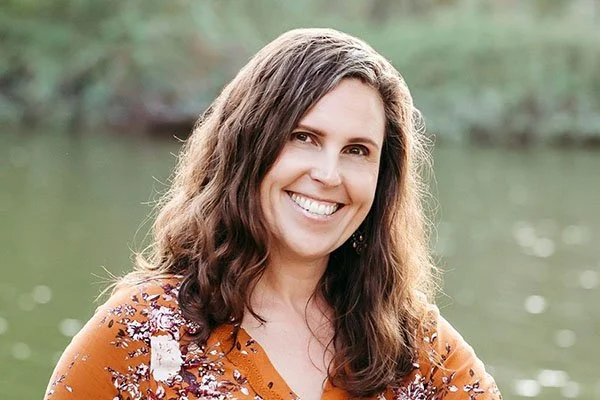
“When I’m too comfortable,” Melanie Taylor says, “I kind of want to just go out and seek some sort of challenge. It’s my sign that I have a place where I need to grow. I need some discomfort.”
As a business consultant, Melanie describes her mission as bringing more ease, effectiveness, and enjoyment to work, life, and humanity. For business owners who are facing personal and system-level challenges, seeking discomfort might seem counterintuitive—but Melanie can personally vouch for the power of staying just outside of the comfort zone.
Melanie’s career path can be best described as a winding one. She began in civil engineering after high school, then went on to complete a master’s degree, which she described as “a very respectable way to buy yourself a couple more years without having to go out into the real world.”
The real world eventually guided her into health and safety in manufacturing for her now ex-husband’s family business, which exposed her to the operations side of things, but also to the crucial culture work that came with ownership and family business issues. Then came an unexpected turn into co-owning Vesta Shop, a store and parenting centre in St. Thomas, for about 10 years. The result was an unconventional schedule: breastfeeding support two days a week, then forklift and crane training for the other three.
These days, the sum of her eclectic experience has taken her in a direction that harnesses the knowledge she’s gained from each stop on the journey.
“I used to say that I wanted to get into consulting one day when I was old and knew everything,” Melanie says, laughing at herself. “I now realize, as I close in on fifty, that I will never be old and know everything. Consulting has been something I’ve kind of wandered down, wondering how it all connects and where it’s going. After eleven years, it feels like it’s making some sense now.”
Through her self-named business, Melanie Taylor Consulting, she works primarily with business owners and executives to develop the thinking, skills, habits, and structures that support the organization and the people in it to succeed through effective leadership. Her partner business, Humaning Made Easier, extends this work by licensing and training other coaches and facilitators to use its programs.
The name “Humaning Made Easier” came when Melanie connected her former store’s slogan, “Parenting Made Easier,” to the common phrase “adulting is hard.” She describes adulting as the practice of fulfilling all of the responsibilities that come with adulthood—but humaning isn’t about responsibility. It’s about the practical and spiritual work of getting up every day and living.
“Humaning is hard” is a phrase that authentically recognizes the challenges and discomfort that come with being human. It recognizes that life is mostly about making decisions and being challenged to learn and grow, things that tend to lead us to feel discomfort. But that discomfort isn’t necessarily a signal that something is wrong, and Melanie's work aims to help create a space where people can work through it so they can make changes that help them thrive.
“In all of the Humaning Made Easier work, we explore discomfort a lot because it is one of the key barriers to making any sort of change,” Melanie explains. “To make things easier, more effective, more enjoyable, you have to change, and discomfort is often the thing that people bump into. This doesn’t feel comfortable gets interpreted as this isn’t right or I don’t like this.
From a neuroscience perspective, we stay on the wrong path because it’s comfortable. Our brain is comfortable with what it knows. So even if you’re walking on gravel and twisting your ankle, you’ll keep walking and ignore the paved path that’s right in front of you. I think we often probably need to stop and say, Am I continuing on this path because it's comfortable, and I know it? Or am I continuing on it because it's the right thing for me?”
It’s easy to stay busy and avoid the hard questions, or dismiss red flags by insisting we’re persistent enough to push through an unhealthy situation. But at some point, whether through internal sabotage or external forces, many people eventually find themselves bulldozed off the wrong path.
Most of the time, when people go through a major transition like getting fired, landing in burnout, or ending a relationship, they later acknowledge that they had sensed the problem but turned away from it. It’s nothing to be ashamed of. After all, humaning is hard.
The key, to Melanie, is taking the time to discover and explore the underlying emotions connected with feeling uncomfortable. Taylor said the first step is to notice discomfort rather than responding on autopilot and immediately avoiding it. Truly making space to listen and reflect helps people between a feeling that may signal genuine danger and one that’s a challenge to core beliefs or an opportunity for growth.
Feelings aren’t an inconvenience, they’re a compass. There’s a reason “follow your gut” is such a common phrase.
“I can’t say that our intuition is always going to be right, but more often than not, it’s good to listen to if you can calm down and pay attention,” Melanie says. “I think what we need to do—and benefit from doing—is figure out more ways to feel supported and support ourselves through the feeling.”
Crucially, the work doesn’t have to be done alone; real growth rarely happens in a vacuum. A trusted friend or community can help someone regulate and move through a spiral, especially when they can authentically listen and understand the type of support someone’s looking for.
For business leaders, who carry the responsibility of an entire company, it can be easy to feel alone. Our current society doesn’t often reward that vulnerability, and I don’t know can feel like a dangerous phrase, while being one of the most valuable ones a leader can say. When leaders admit uncertainty, they create a space for others to do the same, and the impact ripples throughout an organization. Melanie loves helping leaders, particularly senior leaders and business owners, get comfortable with not having all of the answers.
“None of us know exactly what we're doing, and just because you happen to be in this executive role doesn't mean you automatically have all the answers,” Melanie says, “And I think now looking at it, I think the more senior you go, probably the less you actually know the answers, which is why it’s so valuable to listen, both to yourself and others. Really, I think people need a safe space to be able to say, I don't know. I don't have it figured out. I am humaning the best I can. This is hard."
We can all create this space for each other. We can meet each other with curiosity rather than judgement. We can respond with compassion rather than blame. We can support each other to learn from mistakes rather than shame and punish them. With the right mindset, support, and a solid dose of compassion- for ourselves and others, we can all make humaning a little bit easier.
Want to hear more from Melanie? Find her on LinkedIn under Melanie Taylor, as well as through melanietaylorconsulting.com and humaningmadeeasier.com.